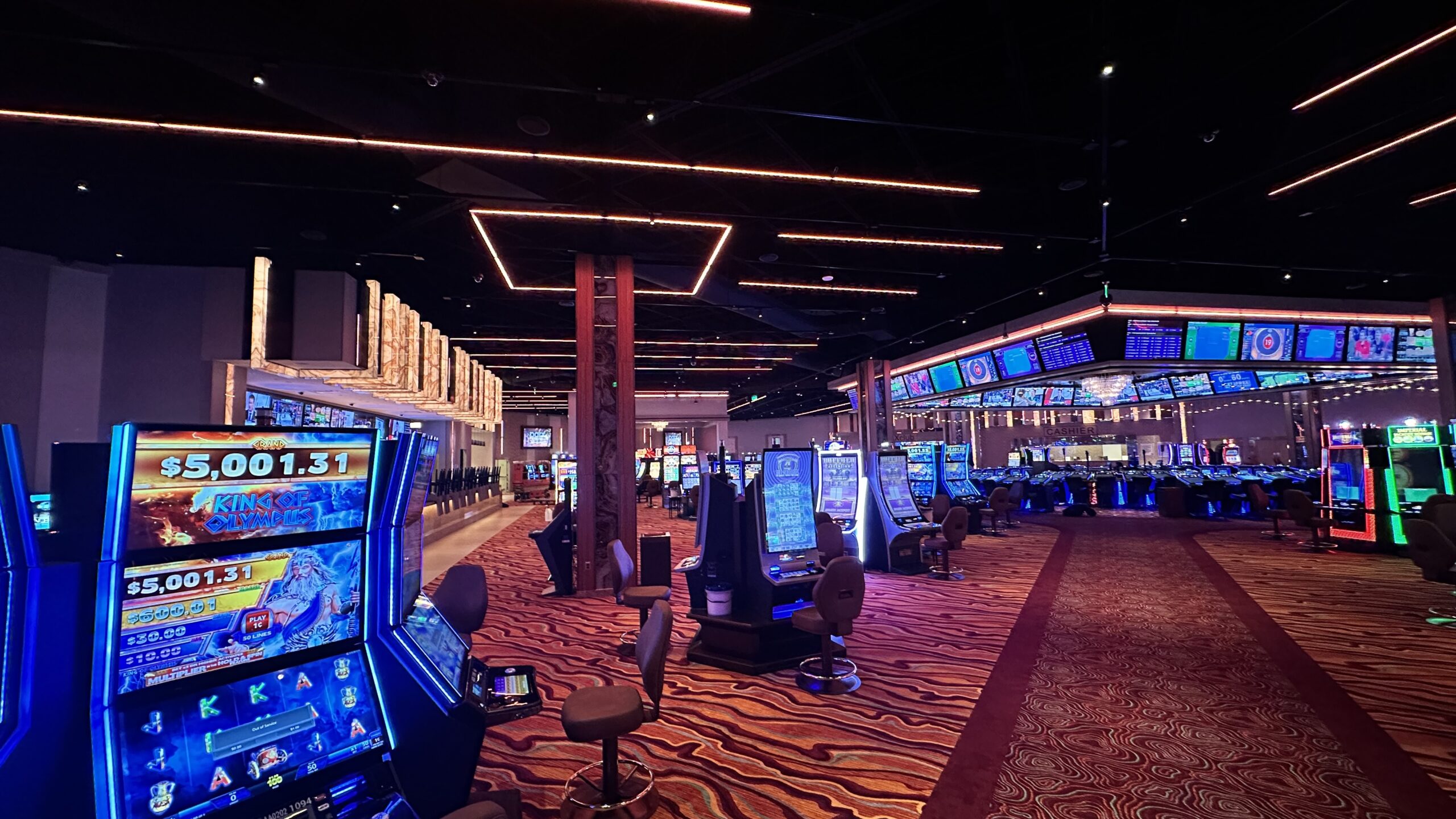
Casino games may look simple from the player’s side, but modern games are built around detailed mathematical models, software systems, probability calculations, and carefully designed user experiences. From spinning reels to digital table games, developers combine these elements to create games that are predictable from a mathematical perspective while still producing different outcomes from one play to the next.
The scale of the industry helps explain the growing attention on game design. The American Gaming Association reported that U.S. commercial gaming generated $78.72 billion in gross gaming revenue in 2025, a 9.2% increase from 2024. Traditional casino gaming accounted for $50.94 billion, while iGaming reached $10.74 billion.
The Mathematics Behind Modern Casino Games
Probability sits at the center of almost every casino game. Developers first establish the possible outcomes and assign probabilities to those outcomes. The system can then calculate expected returns and design payouts around those numbers.
For digital slot games, a random number generator (RNG) is a key part of the process. Recent industry coverage explains that an RNG selects the outcome, while the virtual reels display the corresponding symbols afterward. In other words, the animation is primarily a visual presentation of an already determined result.
Another important figure is return to player (RTP). If a game has a theoretical RTP of 96%, it is designed to return an average of $96 for every $100 wagered across a very large number of plays. It does not mean an individual player will receive exactly 96% back during a particular session.
Developers also use volatility to shape the distribution of results. Lower-volatility games generally produce smaller returns more frequently, while higher-volatility games can produce larger outcomes less often. These mechanics help create different playing experiences without changing the basic role of probability.
Technology Is Changing Casino Game Development
Modern casino development increasingly combines mathematics with software engineering, graphics, sound, mobile design, and interactive features. Online games must also work across different screen sizes and maintain consistent performance when thousands of users are playing at the same time.
The growth of online gaming provides a clear picture of this shift. According to the AGA’s 2026 Commercial Gaming Revenue Tracker, U.S. iGaming generated $3.03 billion in revenue during Q2 2026, representing a 16.5% increase from the same quarter a year earlier. Traditional casino gaming generated $13.43 billion during the quarter, including $9.77 billion from slots and $2.60 billion from table games.
These numbers show why developers continue investing in digital casino technology. Games are no longer designed only for physical casino floors. Online versions need responsive interfaces, secure transaction systems, reliable game servers, and software that can communicate results clearly.
Modern casino design is therefore a combination of mathematics, technology, and entertainment design. RNG systems determine outcomes, probability models shape payouts, RTP describes long-term theoretical returns, and volatility influences the pattern of results. Behind the simple action of pressing a button or placing a bet is a much larger technical system designed to make every game function consistently.