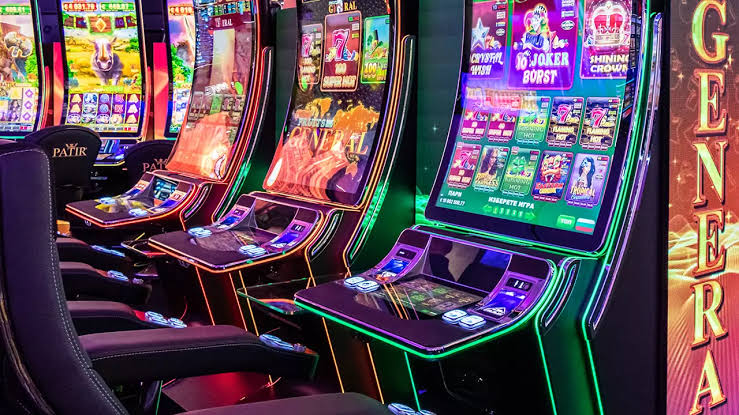
Game Design Draws Greater Attention From Researchers
Casino games are increasingly being examined not only for their mathematical structure but also for the ways their design influences player decisions. From spinning reels to bonus rounds and digital sound effects, individual features can shape how people understand wins, losses, and their chances of success.
A 2025 research commentary published in the journal Addiction highlighted deceptive design practices on online gambling platforms, including rapid gameplay, near-miss outcomes, and features that can encourage players to continue betting. The findings have added to discussions about transparency and consumer protection as gambling moves further into digital environments.
Random Outcomes and the Role of Probability
Most modern electronic casino games use random number generators (RNGs) to determine outcomes. In properly implemented systems, the RNG produces results according to the game’s programmed probability model. A player’s previous loss does not automatically make a win more likely on the next spin.
Return to player (RTP) is another important measure. A game with a theoretical RTP of 96% is designed to return an average of $96 for every $100 wagered over a sufficiently large number of plays. The remaining $4 represents the theoretical house advantage. It does not mean an individual player will receive exactly $96 after wagering $100.
Understanding this distinction matters because short sessions can produce results that differ substantially from long-term mathematical expectations. Game mechanics may influence how players interpret these results, but they do not necessarily change the underlying probabilities.
Near Misses and the Psychology of Decision-Making
Near misses occur when a result appears close to a winning combination without actually delivering the prize. For example, a slot machine might display two matching jackpot symbols while the third stops just short.
A 2024 study published in Psychology of Addictive Behaviors examined the near-miss effect through a series of conceptual replication experiments involving online slot-machine gambling. This research addressed whether near misses influence players’ responses and perceptions during play.
Such outcomes can make a loss feel more significant than an ordinary losing result. Players may interpret a near miss as evidence that a win is approaching, even though it does not establish that the next attempt has better odds. This misunderstanding can encourage additional wagers and longer sessions.
Sound, Speed, and Bonus Features
Modern casino games often combine animations, celebratory sounds, multipliers, and bonus rounds to create a more immersive experience. These features can make gameplay feel exciting and provide immediate feedback after each result.
However, presentation can sometimes obscure the financial reality of a wager. For example, a game may celebrate a small prize even when the amount won is less than the stake placed on that round. Faster gameplay can also increase the number of decisions made within a short period, leaving less time to consider spending.
For developers and regulators, the challenge is to distinguish entertaining design from features that could mislead users about their results or encourage excessive play.
Transparency Becomes a Key Industry Issue
Research into casino mechanics is contributing to wider conversations about fair game design. Clear RTP disclosures, understandable betting rules, independently tested RNG systems, and accessible spending limits can help players make more informed decisions.
Ultimately, casino outcomes depend on probability, while interface design can influence how those outcomes are perceived. Understanding both sides provides a more accurate picture of modern gambling. As digital casino products evolve, transparent mechanics and responsible design will remain important to protecting consumers and maintaining trust.