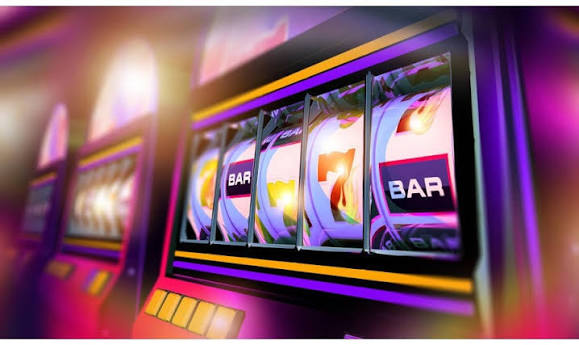
Casino games are designed around a mix of mathematics, probability, and player decisions. While some games depend almost entirely on chance, others give players opportunities to make strategic choices. Understanding these differences can help explain why people approach blackjack, roulette, and slot games in different ways.
For players exploring casino gaming, learning the basic mechanics is more useful than simply following popular betting systems. Concepts such as house edge, return to player (RTP), and volatility provide a clearer picture of how these games work.
The Role of House Edge and RTP
The house edge is the mathematical advantage a casino has over players in a particular game. RTP, or return to player, shows the percentage of money a game is expected to return over a very large number of plays. Understanding these figures can be an important part of Casino Strategy, particularly when evaluating how different games work mathematically.
For example, a game with a theoretical RTP of 96% has a house edge of 4%. If players collectively wager $10,000, the theoretical return would be $9,600 over a sufficiently large number of plays. The remaining $400 represents the expected mathematical advantage of the casino.
However, these figures do not predict the outcome of a single session. The actual results can vary significantly because of random outcomes and game volatility. The UK Gambling Commission explains that actual RTP can differ from theoretical RTP, particularly when the number of recorded plays is limited.
Blackjack, Roulette, and Slots: Different Mechanics
Every casino game offers a different balance between chance and decision-making.
Blackjack: Players can choose to hit, stand, split, or double down. Basic strategy uses probability to guide these decisions. The exact house edge depends on the rules and the player’s choices.
Roulette: Players select wagers such as red, black, odd, even, or individual numbers. On a standard single-zero European wheel, an even-money bet has a house edge of approximately 2.70%. On an American wheel with 0 and 00, the equivalent bet has a house edge of approximately 5.26%.
Slot machines: These games generally rely on random number generators. Players may choose their bet size, paylines, or bonus features, but they cannot control the result of an individual spin. RTP and volatility are important figures when examining how a slot is designed.
These differences explain why a strategy that makes sense in blackjack may have little value in roulette or slots.
How Statistics Shape Player Decisions
Statistics can help players understand risk, but they cannot guarantee a profit. One common mistake is assuming that a game is more likely to produce a win after several losses. In games based on independent random outcomes, previous results do not automatically change the probability of the next result.
Volatility also affects the experience. A low-volatility slot may produce smaller wins more frequently, while a high-volatility game may have longer periods without a significant payout. Two games can have the same RTP but deliver very different short-term results.
The UK Gambling Commission notes that RTP is measured across a substantial number of plays, rather than being a guarantee for every individual session.
Making Sense of Casino Game Mechanics
Understanding casino mechanics gives players a more realistic view of how games operate. House edge explains the long-term mathematical advantage, RTP describes expected returns, and volatility helps explain variations in results.
Strategy can improve decision-making in games where player choices matter, but no betting system can eliminate the risks of chance-based gambling. By examining the numbers and understanding the rules, readers can better appreciate the mathematics behind casino games and make more informed decisions about how they engage with them.